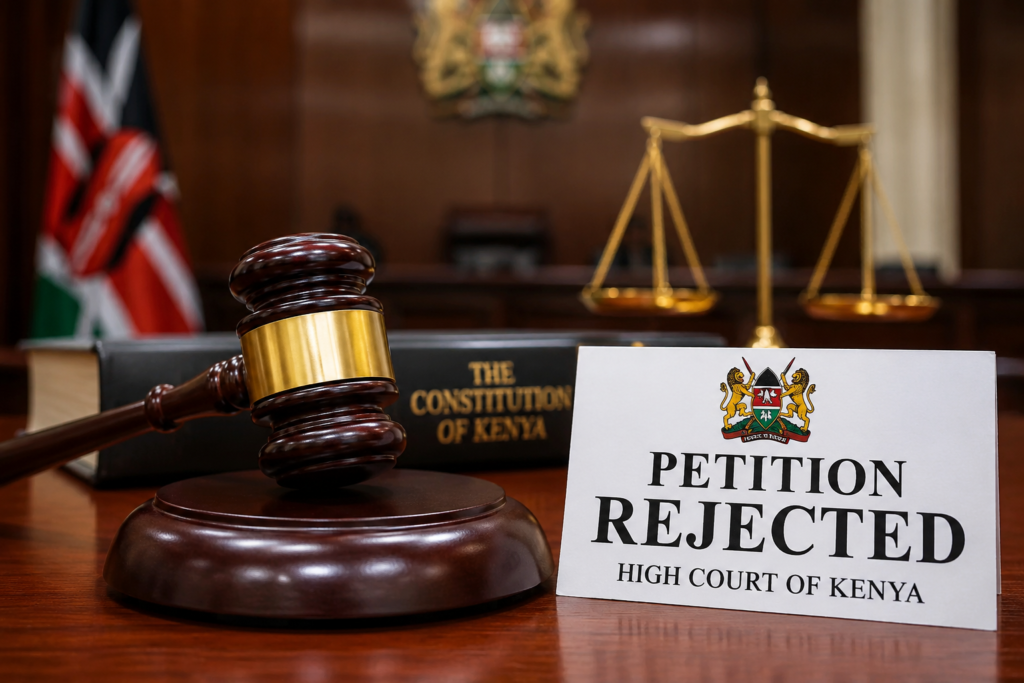
Kenya’s High Court has dismissed a petition seeking to allow Rastafarians to use cannabis for religious purposes, ruling that the country’s drug laws remain constitutional.
High Court Upholds Kenya’s Cannabis Laws
The High Court has dismissed a petition filed by members of the Rastafarian community seeking an exemption to use cannabis (bhang) as part of their religious practices.
In a judgment delivered by Justice Bahati Mwamuye, the court ruled that the petitioners had not established a sufficient constitutional basis to exempt Rastafarians from Kenya’s existing cannabis laws.
Court Recognises Rastafarian Faith
While dismissing the petition, the judge acknowledged Rastafarianism as a religion protected under the Constitution. However, the court held that constitutional protection of religious freedom does not automatically exempt adherents from laws enacted to protect public health and regulate controlled substances.
Why the Petition Was Rejected
The petitioners argued that cannabis is a sacred sacrament central to Rastafarian worship and meditation and that criminalising its use violated their constitutional rights to freedom of religion.
Justice Mwamuye found that the evidence presented did not demonstrate that Kenya’s Narcotic Drugs and Psychotropic Substances (Control) Act unlawfully infringes those rights. As a result, the law banning the cultivation, possession, and use of cannabis remains in force.
Rastafarians to Appeal
Lawyers representing the Rastafarian community have announced that they intend to challenge the ruling at the Court of Appeal, arguing that the judgment does not adequately protect their religious freedoms.
What the Ruling Means
The decision means that cannabis remains illegal in Kenya, including for religious use. Any change to that position would require either a successful appeal or legislative reform by Parliament.